SENIOR PROJECT 2025 - HÀN MẶC TỬ POSTER SERIES
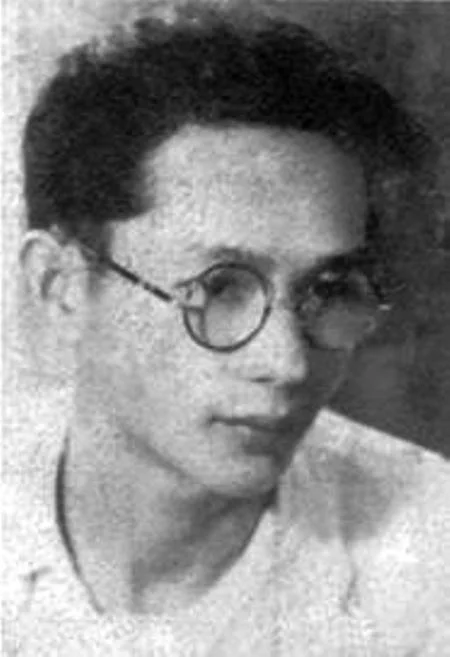
Born Phanxicô Nguyễn Trọng Trí on September 22, 1912, Hàn Mặc Tử was a tragic genius who experimented with symbolism, romanticism, and religious mysticism. In his poems, he combined intense emotions, spiritual longing, and imagery of suffering and ecstasy. He passed away on November 11, 1940 at the age of 28 after a 5-year-long battle with leprosy, and is today considered one of the greatest Vietnamese poets of all time.
Thánh Nữ Đồng Trinh Maria (Ave Maria)
The phrase “song Lộc triều nguyên” comes from the astrology of the Chinese Song dynasty and describes the nobility of a person blessed by Heaven with more graces than anyone on earth. “Song Lộc” refers to Hoá Lộc and Lộc Tồn, both stars of fortune and prosperity. Hoá Lộc is the star of earthly glory and graces, and Lộc Tồn is the star of endless and salvific heavenly graces. “Triều” means to turn towards or to pay homage to, and “nguyên” means destiny or beginning. Therefore, “song Lộc triều nguyên” means that from the beginning of time, Mary’s destiny was to be filled with an endless amount of earthly and heavenly graces from God.
Hàn Mặc Tử was a devout Catholic who had a deep devotion to the Virgin Mary. In the final years of his life, while suffering from the debilitating symptoms of leprosy, he experienced a brief period of recovery in which his symptoms improved greatly, a “miracle” he attributed to the Virgin Mary. Filled with great joy, he wrote “Thánh Nữ Đồng Trinh Maria” as a prayer of thanksgiving to his heavenly protectress.
Within 50 years after his death, the poem was turned into a choral piece called “Trường Ca Ave Maria” by Hải Linh, one of the greatest Vietnamese Catholic composers of all time. Today, this piece, especially the first movement (“Như song Lộc triều nguyên…”) is still sung in churches in Vietnam and overseas on special Marian feast days.
“Đông” (“Winter”) - from Ngâm Vịnh II (Poem Recital II)
“White covers the mountain peaks — the first winter snow,
Calling flocks of swallows, chirping by the river’s flow.
Inside her quiet room, the maiden lies reading,
Half-smiling — her charm warm, tender, and glowing.”
This poem paints a delicate winter scene that blends nature, beauty, and emotion in perfect harmony — a hallmark of classical Vietnamese and East Asian poetic aesthetics. It celebrates the harmony between outer nature and inner emotion, between the purity of winter and the warmth of love and life. In just four lines, the poet captures the visual beauty of snow and mountain, the gentle music of birds by a river, and the graceful warmth of a young woman lost in her book. It’s a snapshot of tranquil, poetic balance — a moment where beauty, solitude, and tenderness coexist.
“Đông” is part of a larger poem called “Ngâm Vịnh II” and is a work of his written under another pen name, Lệ Thanh. Throughout his career, he went by several other pen names, including Phong Trần, Lệ Thanh, Minh Duệ Thị, and Hàn Mạc Tử, a name he created in 1936 which means “the young man standing behind the cold and empty curtains.” His friends suggested he add a crescent moon to depict the loneliness of man before nature and all things, and so a crescent moon was added to “Mạc,” transforming it into “Mặc,” and with it the meaning of the entire name, which was now “the young man with the writing brush.”
Thanh Nhàn (Quiet Leisure / Serene Idleness)
“A human life — how fleeting when we see,
Wealth and glory drift like clouds set free.
All we spend is borrowed from Heaven’s store,
And all our days are stained with love of more.”
“Thanh Nhàn” means pure leisure, serene simplicity, or peaceful idleness. It’s an ancient ideal in Vietnamese and Chinese thought — describing a state of spiritual calm and detachment from worldly ambition. For Hàn Mặc Tử, who lived a life marked by illness, isolation, and deep faith, “thanh nhàn” is not mere laziness or retreat — it is a spiritual victory: finding inner light and joy even amid suffering and solitude. Therefore, “Thanh Nhàn” expresses Hàn Mặc Tử’s ideal of spiritual freedom: to live simply, peacefully, and joyfully — untouched by the fleeting ambitions of the world, finding eternity in quiet beauty and faith.
Catholic imagery and subjects can be found in many of Hàn Mặc Tử’s poems. In “Thanh Nhàn,” for example, he reminds the reader that all our material possessions come from nature, the work of God the Creator. He saw poetry as a tool for evangelization, and his devotion to Catholicism was embedded in his creative ideology — in “Quan Niệm Thơ,” in which he describes his personal philosophy about poetry, he says that a poet’s mission is to glorify God and help people appreciate His creations through their poetry.
Trồng Hoa Cúc (Planting Chrysanthemums)
“I love to plant chrysanthemums for my delight,
So plain they seem, yet full of charm and light.
In quiet nights, I drink beside the moon,
The lonely autumn garden brings enough of boon.”
The chrysanthemum (hoa cúc) has long been a symbol in East Asian poetry — especially in Chinese and Vietnamese tradition — of purity, modesty, and noble solitude. When Hàn Mặc Tử says the chrysanthemum looks “simple” yet “full of charm,” he reflects his appreciation for hidden beauty and inner virtue, not the gaudy or ostentatious. “Trồng Hoa Cúc” expresses the poet’s search for purity, beauty, and spiritual peace in the midst of solitude. Through the humble chrysanthemum, he reveals a philosophy of contentment — finding joy not in grand passions or riches, but in simple, quiet things: a flower, the moon, and the stillness of an autumn night.
In Vietnamese, the word “hoa cúc” not only refers to chrysanthemums, but also to daisies, which are called “hoa cúc dại.” The poem can also be understood to be describing daisies, as they too are “plain, yet full of charm.” The daisies, therefore, can be seen as an appropriate substitute for chrysanthemums and make the poster a visual example of how a word can mean two different things yet embody the same essence.
Trăng Vàng Trăng Ngọc (Golden Moon, Jade Moon)
“Moon! Moon! Moon! — it is the Moon, the Moon, the Moon!
Who will buy my moon? I will sell it to you.
But not the moon of love, of promised tryst…”
In “Trăng Vàng Trăng Ngọc,” one of Hàn Mặc Tử’s most celebrated poems, he celebrates the moon, which he loved deeply and which appears so often in his works, not merely as a celestial object, but as a symbol of purity, divine beauty, and mystical love. The poem overflows with admiration and reverence — the moon becomes something sacred, radiant, and almost unreachable, reflecting both spiritual longing and sensual passion.
In the poem, he mimics a street vendor’s call and pretends to sell the moon, a celestial object that everyone can claim but cannot truly possess for themselves. However, he quickly withdraws, declaring that he cannot sell the moon of “reunion and love’s promise” (đoàn viên, ước hẹn hò) — suggesting that the deepest emotions and ideals and all that is held sacred cannot be bought or traded.
Thời Gian (Time)
“I bow before the countless stars above,
And beg them: still your courses, halt time’s move —
Slow down the years, that she whom I adore
May keep her beauty bright for evermore.”
This poem is a meditation on the passing of time and the poet’s yearning for eternity. It’s about impermanence — the fading of youth, virtue, and love — set against the eternal, unchanging beauty of the stars and moon. It reveals Hàn Mặc Tử’s desire for purity and timelessness, his awe of cosmic order, and his grief over the decay of the human world.
In particular, the stanza featured in the poster, the last of the poem, is both a prayer and a plea. The poet kneels before the stars, begging time to stop — so that the woman he loves may remain eternally young and beautiful. It’s a deeply human wish: to hold on to beauty, to freeze a moment of love against the unstoppable flow of time.